
2025 State of State AI Policy
This week, as we prepare for the 2026 legislative sessions, we look back at the legislative year that just ended and examine the 144 AI-related state laws enacted in 2025. Additionally, we take stock of the big picture and the 271 major actions related to AI policy that states have taken over the past few years as this emergent technology continues to become a larger player in our everyday lives.
The year 2025 was a big one for AI policy, especially in the states. We saw state lawmakers in every state introduce a total of 1,208 bills related to AI. Of those, 144 bills were enacted into law in 2025. That’s an enormous increase from the 634 bills that state lawmakers introduced and 99 laws enacted in 2024.
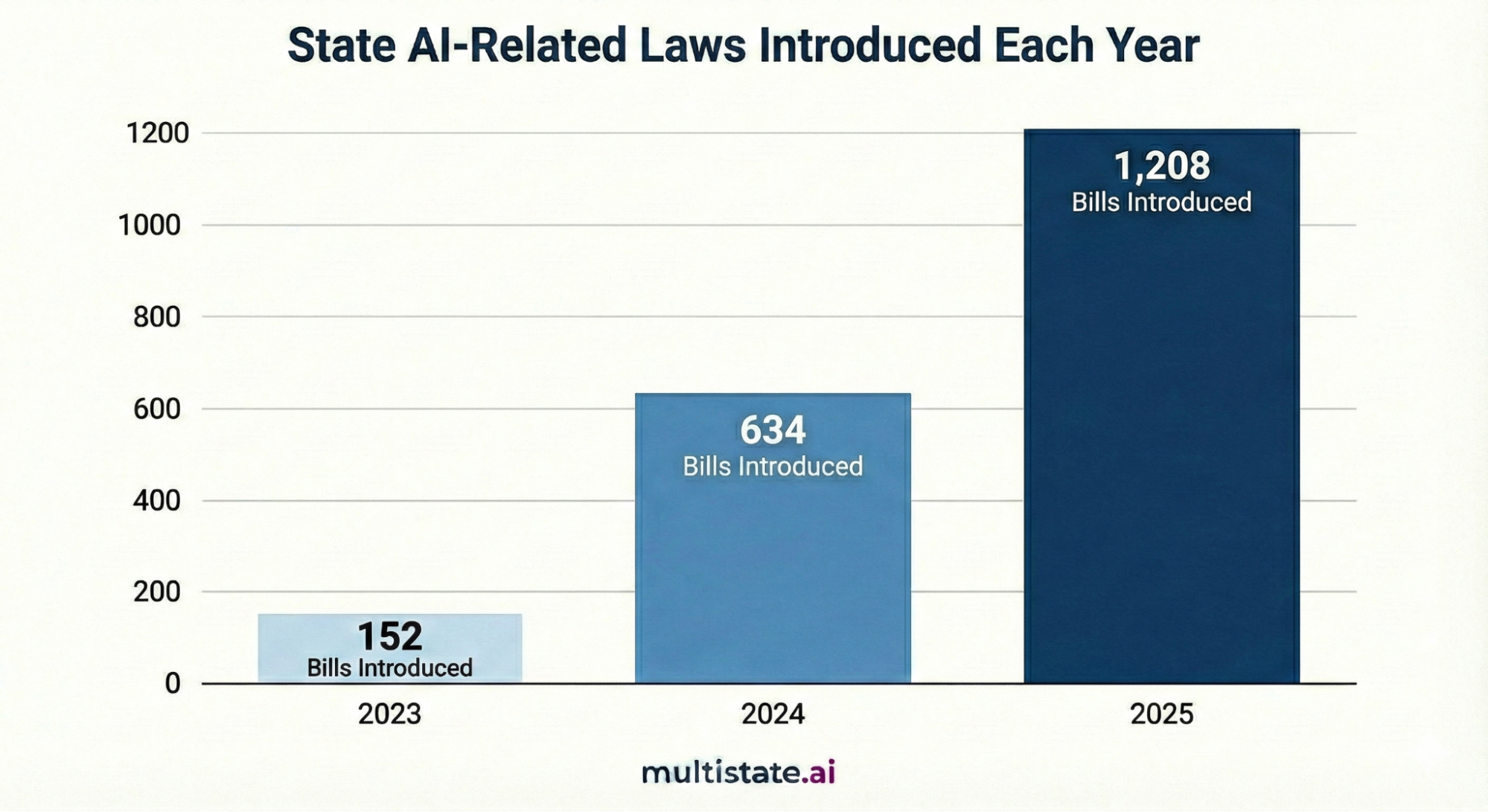
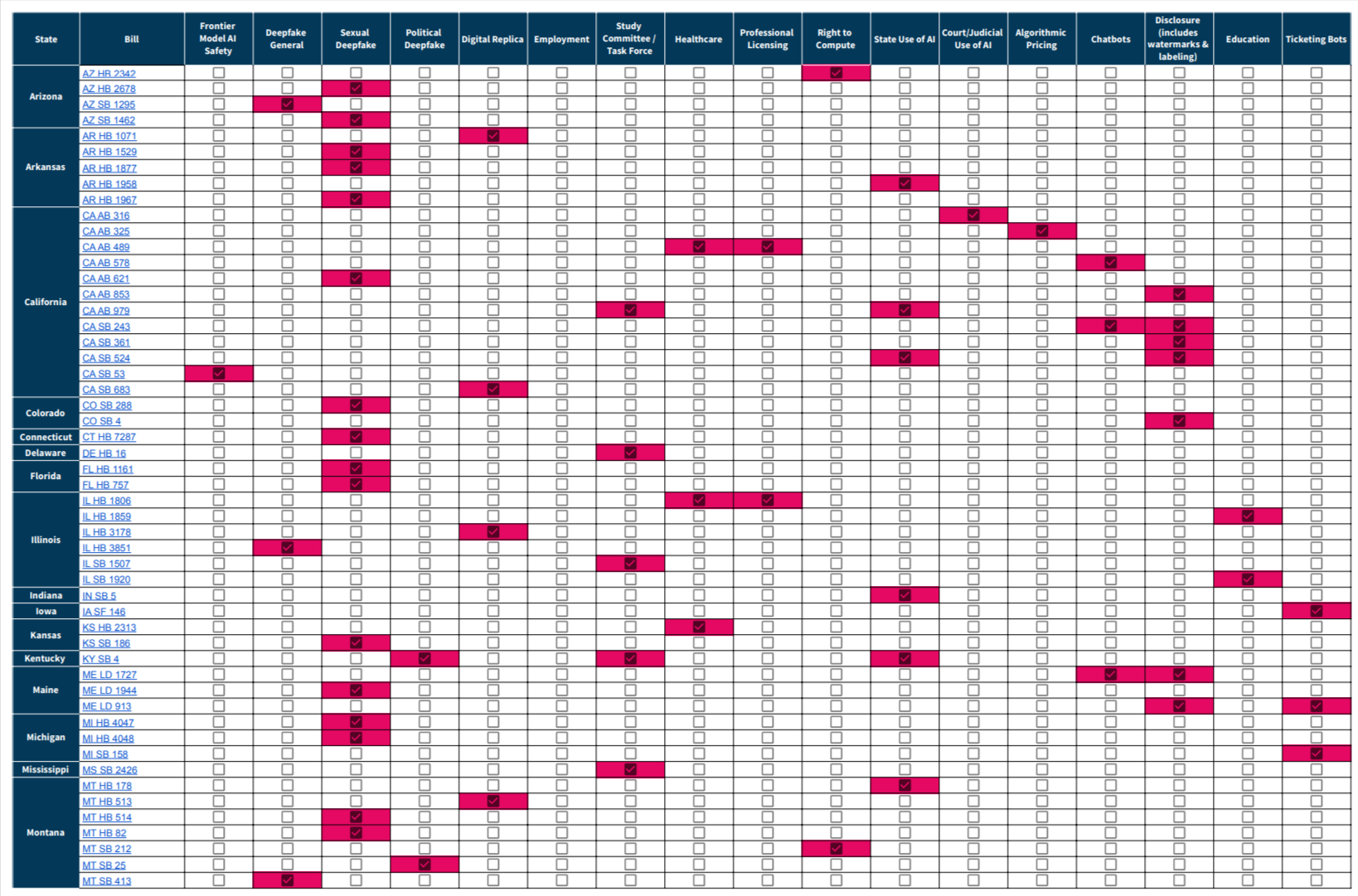
Today, MultiState.ai released a report that breaks down all of the AI policy action of 2025, assess the big picture of AI laws and regulations in the states currently, and sets the stage for what we expect is another big year in AI policy in 2026. In addition to the breakdown of 2025 AI laws summarized in this newsletter, the full report includes two additional resources to help you make sense of the AI-related laws enacted in 2025. The first is a chart that highlights the topics covered by many of these new laws, and the second is a timeline of the dates that the major laws enacted in 2025 will take effect.
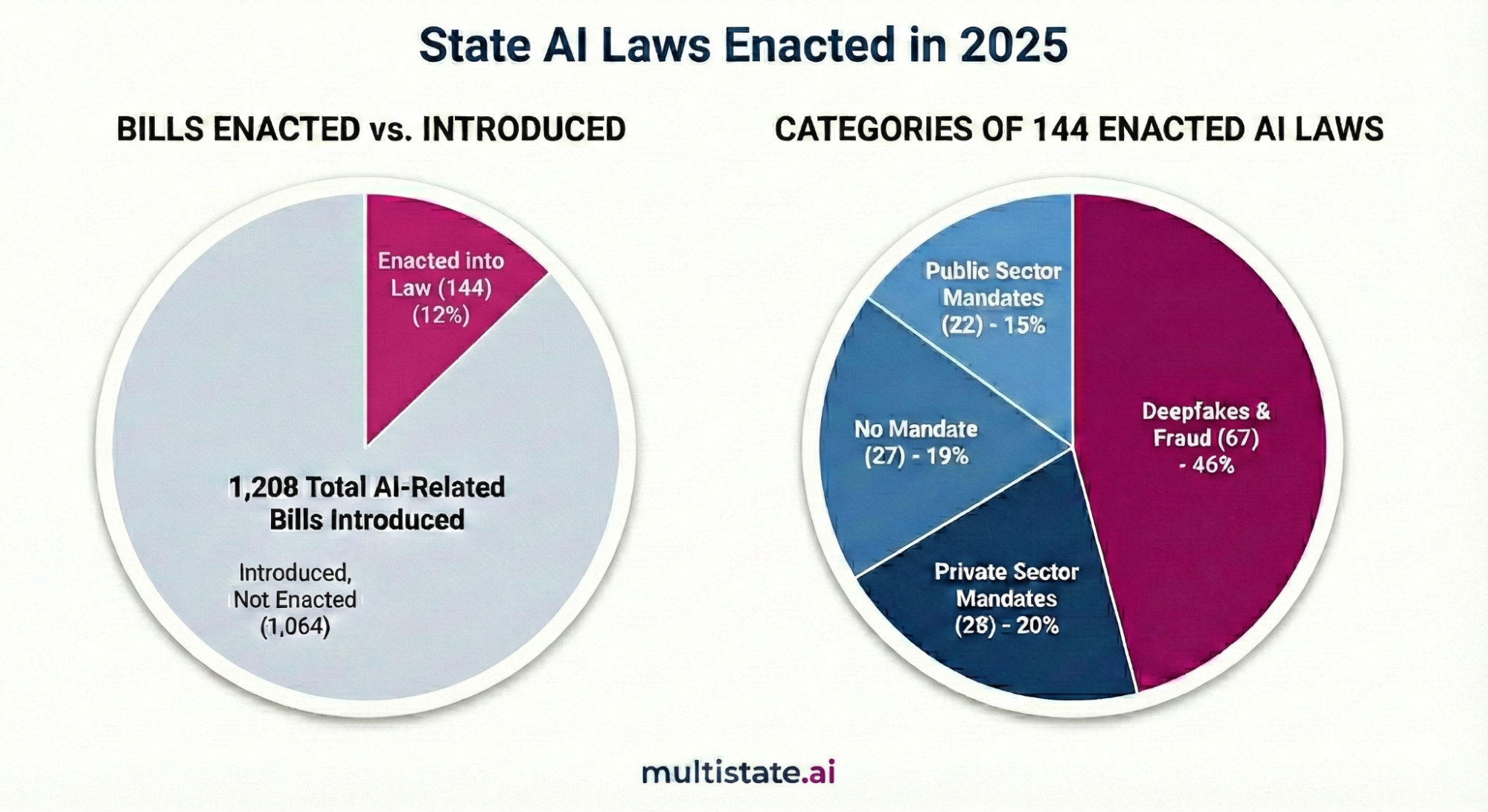
Legislative introductions are key to understanding the debate in state capitals. But at the end of a long legislative session, what’s most important is which of those bills made it to the governor's desk and were signed into law. In 2025, only 144 of the 1,208 AI-related bills introduced were enacted into law. In our November report, we analyzed the new laws in 2025 into several categories based on their requirements and to whom those requirements apply. We’ve updated those numbers and charts with the handful of bills enacted at the very end of the year.
In 2025, 27 (19%) of the new laws relating to AI contained no mandates at all and did things like establish or expand an AI study task force (MS SB 2426) or allow testing of autonomous vehicles (CT SB 1377).
Another 22 (15%) of these new AI-related laws in 2025 place mandates solely on public sector use of AI tools. California's new law (CA SB 524), for instance, mandates that law enforcement agencies reveal whether they created a report using AI, either in its entirety or partially. That’s a mandate, but not on a private sector deployer of AI.
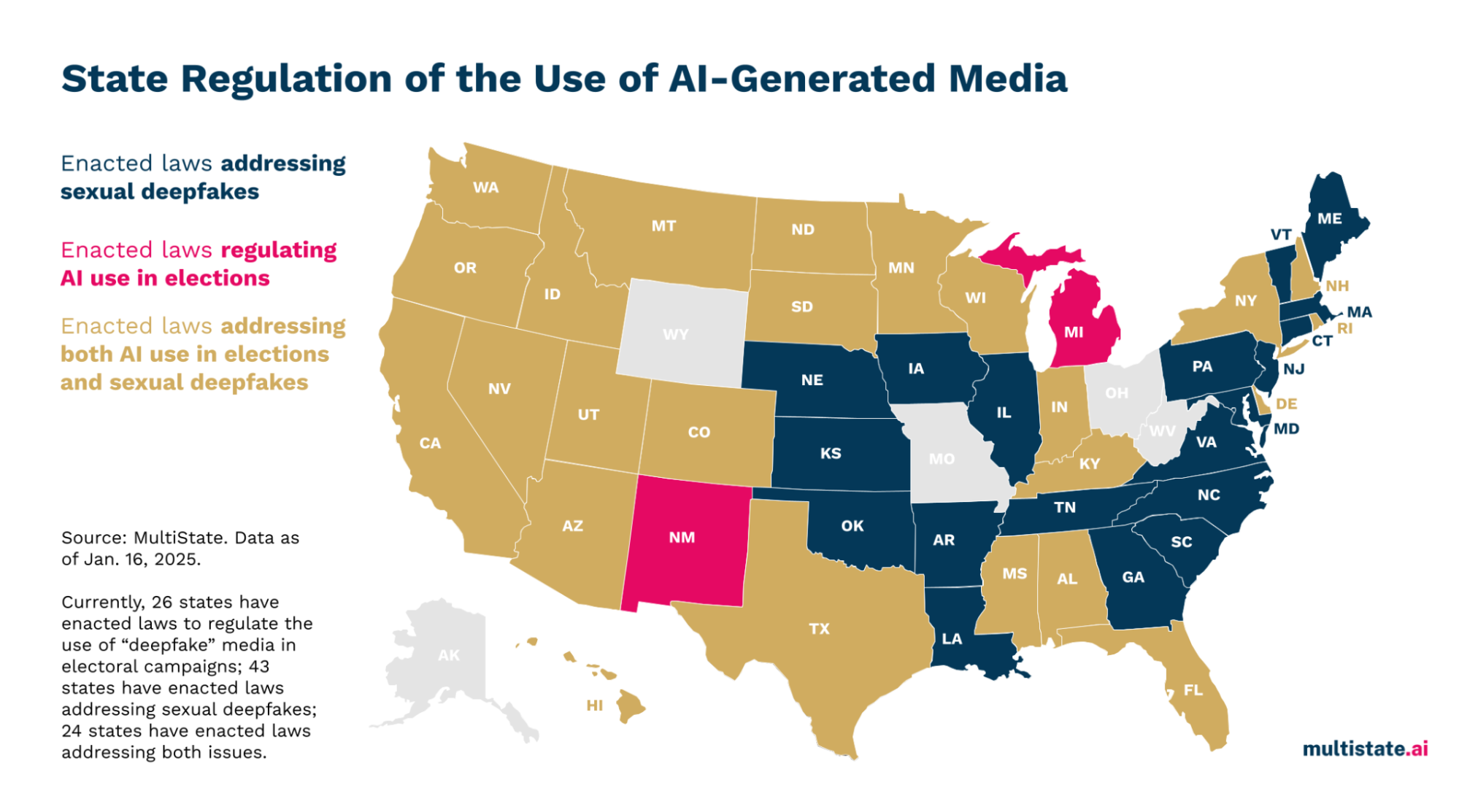
Most of the new laws do things like criminalize, prohibit, or provide a private right of action for specific unauthorized uses of an AI tool. The most popular version of conduct-level regulation of AI, by far, is to restrict the creation and distribution of deepfakes. These have been by far the most popular laws enacted over the past few years. In 2025, 67 (46%) of the new state laws address this issue.
Finally, 28 of the 144 new laws (20%) in 2025 did contain specific mandates on private sector AI developers or deployers. A handful of these mandates are relatively broad, while most of them are considerably narrow, often focusing on a specific professional industry or use case. We wrote extensively about these laws as they were debated and amended through the legislative process.
The headline-grabbing new laws in 2025 are the two AI safety laws enacted in California (CA SB 53) and New York (NY AB 6453 / SB 6953). These laws will require developers of frontier AI models to draft and share safety reports among other reporting requirements. Another notable broad AI bill with some mandates on private sector deployers was signed into law in Texas in 2025, but while TRAIGA (TX HB 149) received much attention when it was introduced, the final version stripped out many of the private sector mandates, applying them only to the public sector, while maintaining some broad transparency mandates aimed at private sector deployers.
Please read the details in the posts below:
However, state lawmakers have been working on AI policy longer than in the last year or two. All in all, the states have taken 271 major actions related to AI policy, including enacted laws, regulations, and executive orders. The top states are California (38 total actions), Texas (16), Illinois (15), New York (15), and Utah (14). Subscribers to MultiState.ai+ can read through each of these major actions in the state-by-state summaries on the Resources section of our website.
In 2026, we expect the increase and bill introductions to continue as this topic captivates and alarms both policymakers and the general public. We anticipate chatbots, particularly companion and mental health chatbots, to be a major area of focus for state lawmakers in 2026 with a framing around children’s safety.

