
Deepfake Legislation in 2025 Dominates State AI Bills Signed into Law
Weekly Update, Vol. 71.
Key Takeaways
In 2025, lawmakers across all 50 states considered over 1,000 state AI bills, but less than 11% were ultimately signed into law, reflecting ongoing debate and industry pushback.
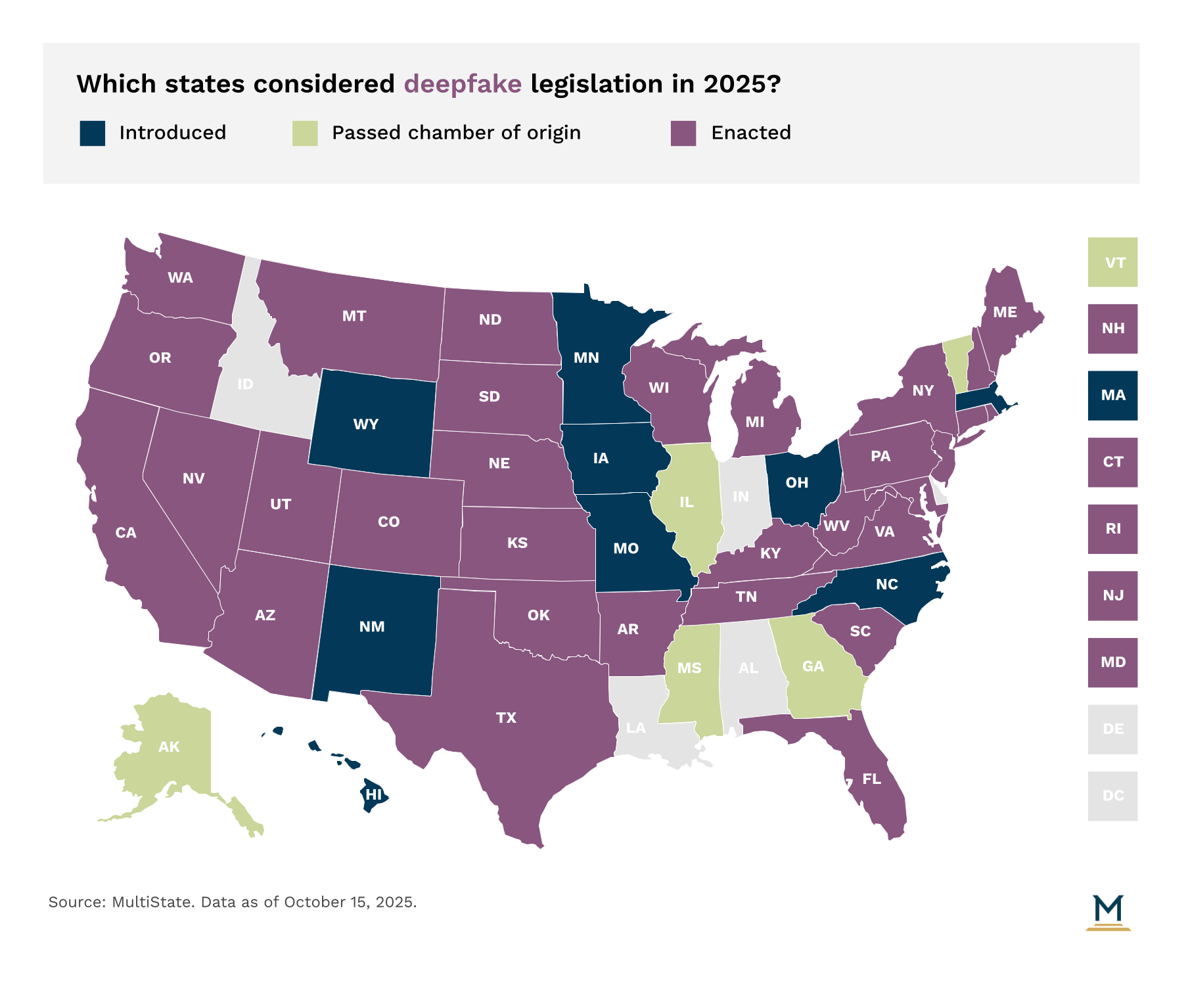
Deepfake legislation 2025 remained a top focus, with 301 bills introduced and 68 signed into law, most targeting sexual deepfakes; digital replica laws were enacted in Arkansas, Montana, Pennsylvania, and Utah.
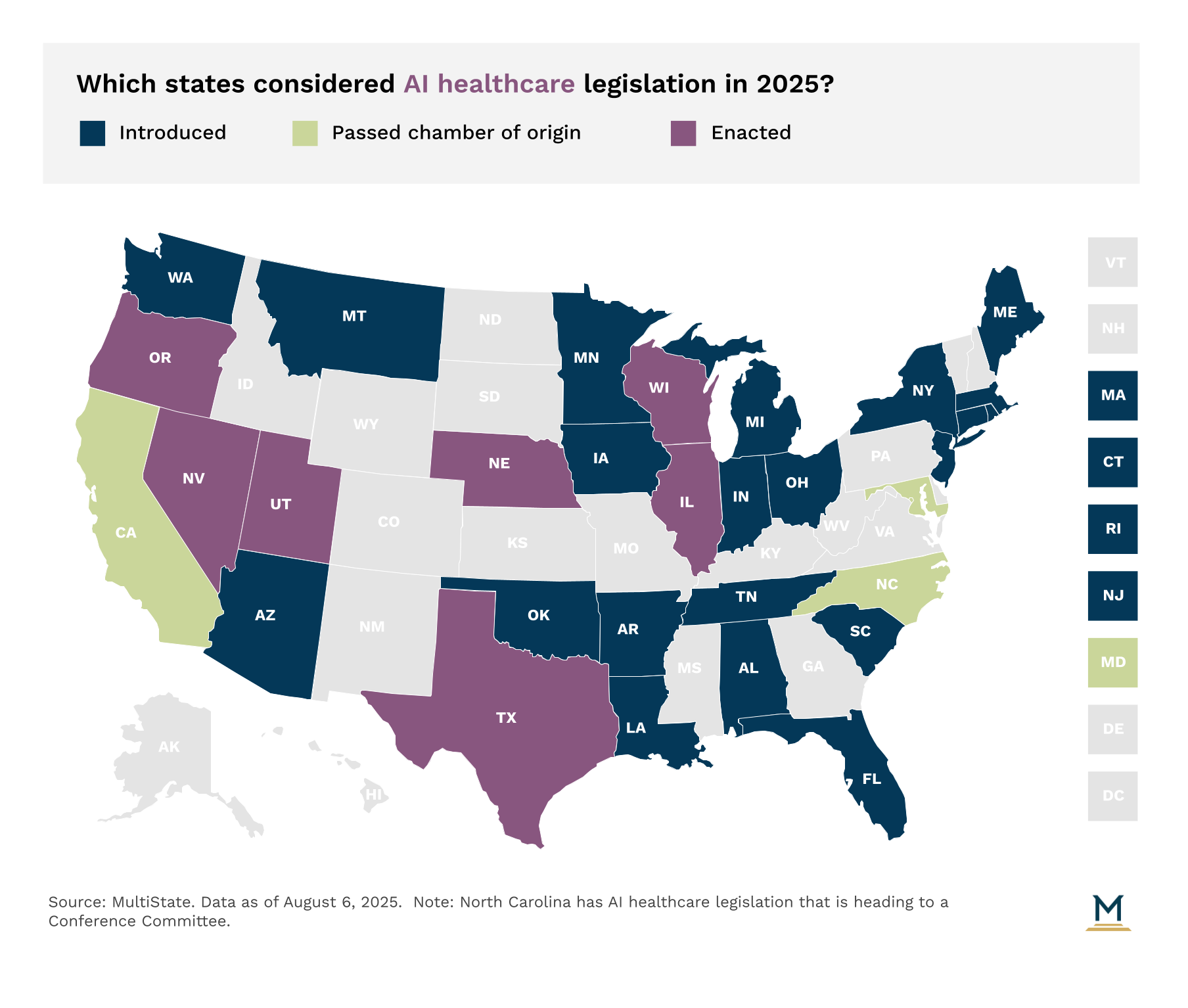
AI healthcare legislation in states saw limited success, with 9 of 83 bills enacted, including new requirements for human oversight and informed consent in mental health services, while some states removed AI provisions before final passage.
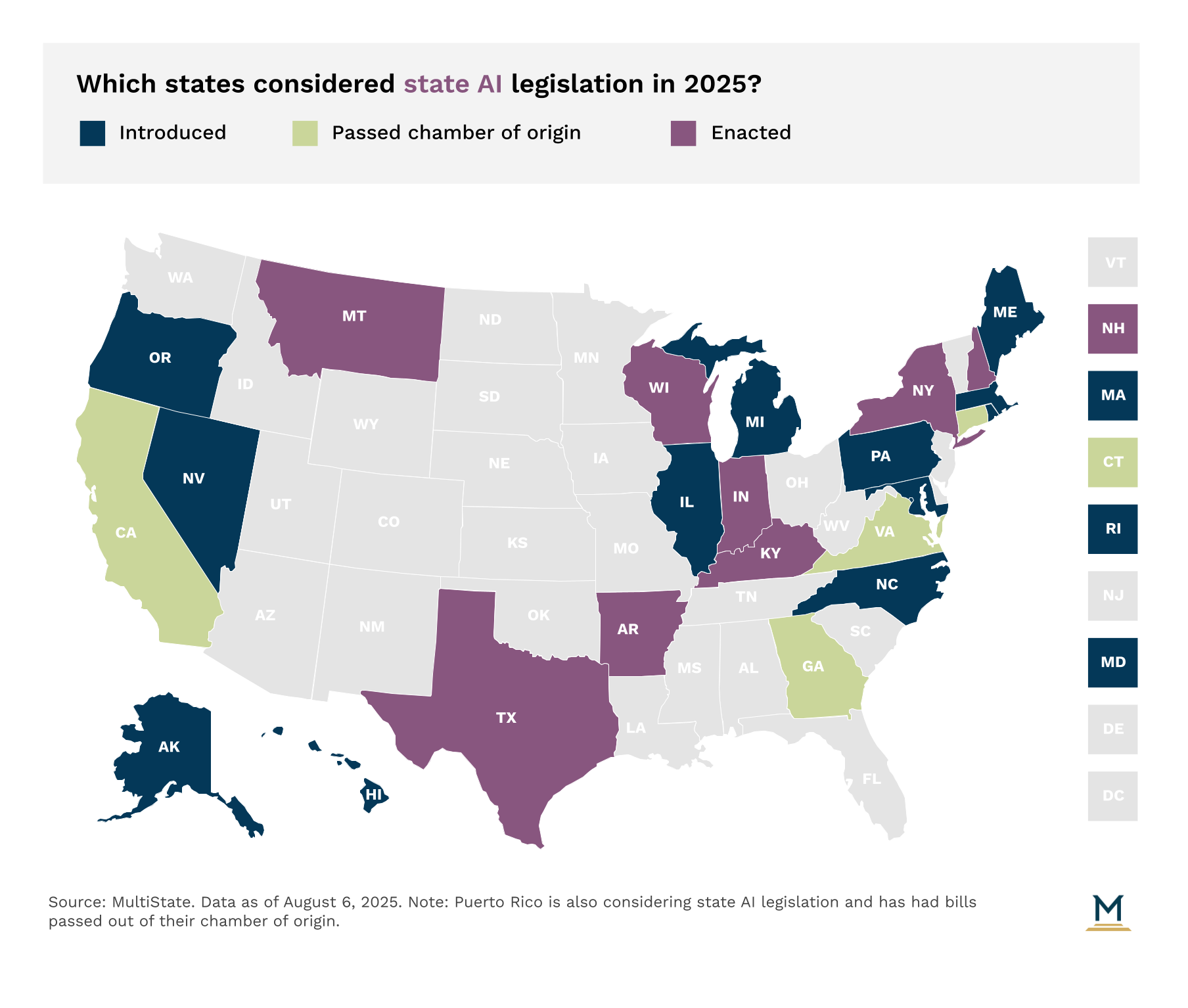
State government AI use laws advanced in seven states, with Texas leading efforts to regulate and inventory state AI systems, require employee training, and establish new oversight divisions.
Puerto Rico also moved forward with state AI bills, including proposals to create an AI officer to oversee compliance in government agencies.
Deepfake Legislation Dominates AI Lawmaking in 2025
Similar to 2024, deepfake legislation has been of major interest to lawmakers this year.
Sexual Deepfake Laws Lead Legislative Priorities
Of the 1,080 AI bills introduced, 301 have addressed deepfakes. Of those 301 bills, 68 were signed into law. Furthermore, 68 of the enacted bills addressed sexual deepfakes specifically (as opposed to political deepfakes; however, many states did adopt political deepfake laws last year in the lead-up to the 2024 election). As we have previously discussed, deepfake legislation is an easy target for state lawmakers, particularly where sexual deepfakes are concerned. This has also been true on the federal level, where the only major AI-specific law to be enacted has addressed sexual deepfakes.
Digital Replica Legislation Gains Traction in Four States
This is likely a trend that will continue in the coming years to address other concerns surrounding AI-generated images and videos. For example, a subset of deepfake legislation addressing the use of digital replicas (authorized AI-generated images of individuals for commercial use) has gained interest among state lawmakers, with lawmakers in 22 states considering digital replica legislation. Of these, four states that enacted deepfake legislation: Arkansas (AR HB 1071), Montana (MT HB 513), Pennsylvania (PA SB 649), and Utah (UT SB 271) enacted digital replica legislation this year.
AI Healthcare Regulation Shows Mixed Results
Legislation addressing the use of AI in healthcare, including health insurance, has also had some success getting enacted this year, with 9 of 83 bills being signed into law. Enacted legislation addressing the use of AI in healthcare is quite varied, and includes prohibitions on AI as the sole decision maker in the utilization review process (NE LB 77), prohibiting using AI to practice mental or behavior healthcare (NV AB 406), and requiring human review of AI used for diagnostic purposes (TX SB 1188). This week, the governor signed a bill (IL HB 1806) into law in Illinois to prohibit the use of AI in mental health services without informed consent. However, legislation addressing AI’s use in healthcare has also faced some setbacks, with provisions related to AI ultimately struck in bills in Arizona (AZ HB 2175) and Connecticut (CT SB 10), which removed provisions related to AI’s use in the utilization review process prior to those bills being signed into law.
State Government AI Use Becomes Legislative Focus
Another area where states have been successful in enacting AI legislation relates to state uses of AI. This year, 13of 64 introduced bills were enacted in seven states addressing state use of AI.
Texas Leads in State AI Implementation Laws
Texas was the most active in this area, enacting legislation establishing an AI Division to assist agencies in implementing AI technology (TX HB 2818), requiring AI training for certain state employees (TX HB 3512), and requiring an inventory of state AI systems (TX SB 1964). Texas also enacted legislation that placed a number of restrictions on state uses of AI (TX HB 149), including requiring disclosures when individuals are interacting with a state AI system, prohibiting AI from infringing on constitutional rights, and prohibiting the use of AI to identify an individual through biometrics without their consent.
Puerto Rico Advances Government AI Oversight
This interest in state AI use has not been confined to the 50 states. In Puerto Rico, three state AI bills have moved out of their chamber of origin in the Legislative Assembly (PR PC 347, PR PS 622). This includes a bill (PR PS 68) that would create the position of AI officer in the Puerto Rican government to ensure all government agencies using AI systems are in compliance with applicable laws and regulations.
Future Outlook for AI Legislation
There is no reason to think that state lawmakers are likely to lose interest in this issue or grow frustrated with the slow progress of bills getting signed into law. More likely, the small percentage of enacted legislation shows areas of disagreement within state legislatures about how to regulate AI, as well as pushback from industry looking to ensure that a new technology is not stifled in its infancy. And while most states have adjourned their legislative sessions for the year, a handful of states are still in session, we’re likely to see some special legislative sessions called before the year is out, and New York’s governor still has significant AI bills pending on her desk.
Track State Artificial Intelligence Policy with MultiState.ai
To help you make sense of state activity on artificial intelligence and other emerging technology, we launched multistate.ai, a resource website and weekly update highlighting key developments in state AI policy and diving deep into select issue areas.

