
Key Takeaways
As AI tools like chatbots and image generators go mainstream, state policymakers are still in the early stages of figuring out how to regulate them — and most are starting by simply trying to get educated on the technology.
Across the country, at least 19 states have set up dedicated groups to study AI, ranging from formal task forces to standing committees and state agencies tasked with developing regulatory recommendations ahead of the 2024 legislative session.
Early hearings suggest that AI transparency and disclosure requirements are likely to be a top priority for lawmakers, with experts pushing for rules that hold companies accountable for how their tools are used — especially around misinformation and elections.
California is already moving in this direction with AB 331, which would require annual impact assessments and give residents the right to sue over algorithmic discrimination.
Beyond disclosure, state AI policy is expected to branch out into areas like bias, deepfakes, consumer protection, and fraud — making the 2024 legislative session one to watch closely.
If you're a subscriber, click here for the full edition of this update. Or, click here to learn more about our MultiState.ai+ subscription.
After years of hype, AI technologies have burst on the scene with consumer products like AI chatbots (e.g., ChatGPT, Bing AI, Google Bard) and image generators (e.g., Dall-E, Midjourney). As AI advances at a record pace, policymakers (like the rest of us) are trying to wrap their heads around what this technology could mean for our future.
State Task Forces and Study Committees Lead AI Education Phase
From a public policy standpoint, we're solidly in the education phase of AI regulation. We're all scrambling to get up to speed on this emerging technology. For policymakers, this means study committees, task forces, and working groups dedicated to hearing from experts and stakeholders with the goal of developing recommendations on how best to regulate AI at this stage in the technology's development.
And that's largely what we've seen this year as lawmakers gear up for a busy 2024 legislative session. You'll see in the map below that eight states have created a dedicated group tasked with studying AI, while another 11 states have asked a standing committee or state agency to take the lead in studying this emerging technology. Additionally, state lawmakers have come together through organizations like NCSL to create intrastate conversations and are even organizing such groups on their own. AI will be on every upcoming meeting agenda.
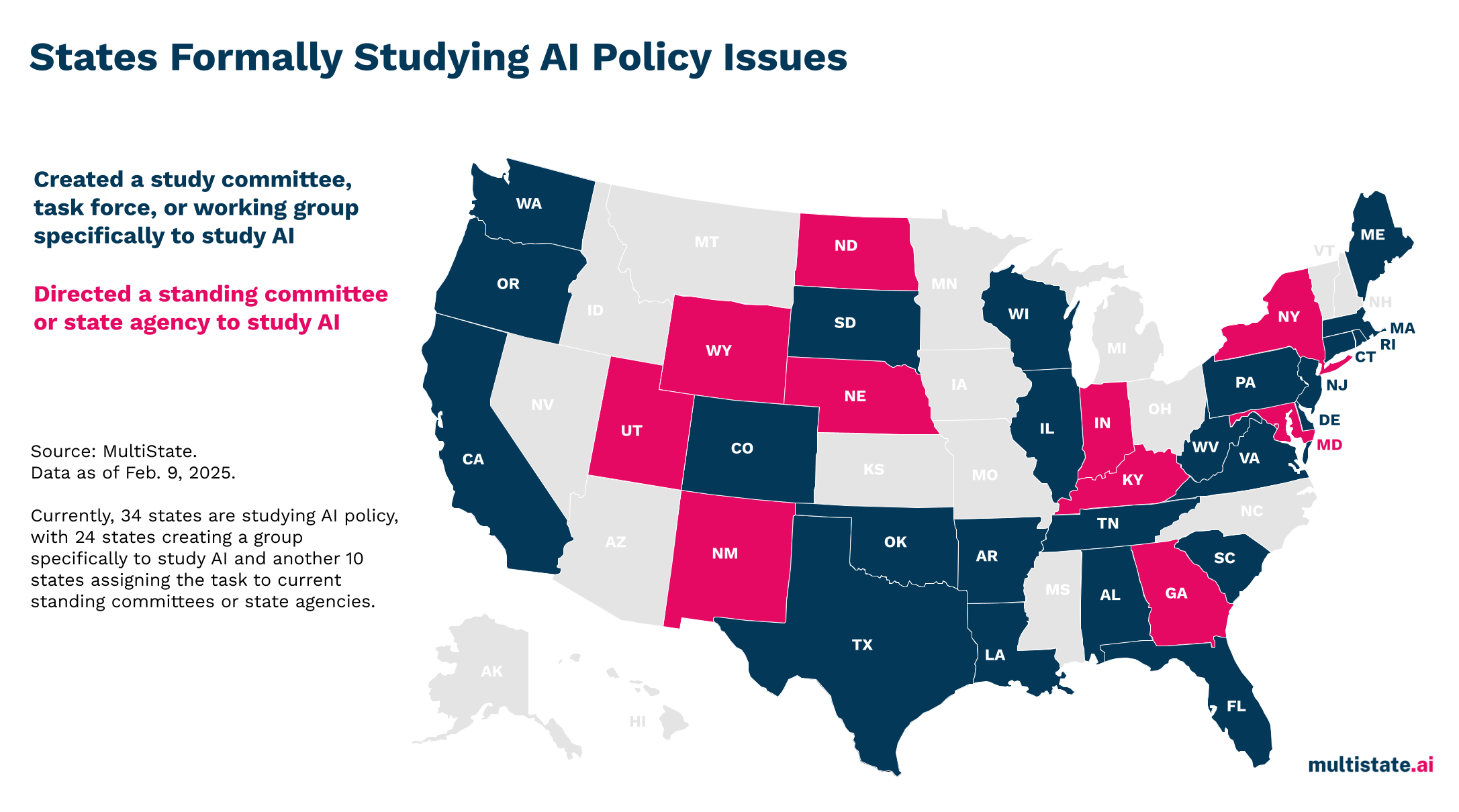
What State Lawmakers Are Asking About AI Regulation
A handful of these groups have already started to come together. So what questions are they asking? Those questions and what they're hearing from experts could give us a big clue about how policymakers plan to regulate AI in the near term.
New Mexico Hearing Highlights Misinformation Concerns
In July, lawmakers in a New Mexico committee heard how AI could enable the deceptive spreading of misinformation to negatively affect people and institutions. Echoing many initial reactions, lawmakers in Albuquerque called the rise of AI technology "scary" and exclaimed that "this isn't science fiction anymore." Testimony at the hearing emphasized that legislation should focus on transparency and disclosure requirements for AI companies and that lawmakers had an opportunity to hold those that create and spread misinformation accountable, specifically those making false political claims during an election campaign.
Transparency And Disclosure Requirements Emerge As Starting Point
An initial focus on transparency and disclosures is a logical starting point for lawmakers. Since we're still in the early stages of both the technological development, commercial deployment, and regulatory oversight of AI, transparency and disclosure could provide a fuller understanding on how AI is being used and who it's affecting. One example of this type of legislation from this year's legislative sessions is California AB 331, which would mandate annual impact assessments and require notification of any person subject to a "consequential" decision by an AI tool. And a key aspect of this bill is that it includes a private right of action, which allows private residents of California to sue developers whose AI tools contribute to "algorithmic discrimination."
Future Regulatory Avenues Beyond Transparency
But this is only one of the many avenues policymakers will explore when regulating AI. Other examples include weeding out potential biases in AI systems; combating misinformation, deepfakes, spam, and fraud; consumer protection and public privacy; and combining all algorithmic software into the AI bucket. Our team at multistate.ai will explore each of these potential regulatory avenues and individual bill language debated around the country.
If you're a subscriber, click here for the full edition of this update. Or, click here to learn more about our MultiState.ai+ subscription.

