State Surveillance Pricing Laws Spread as Maryland Leads the Way
Key Takeaways
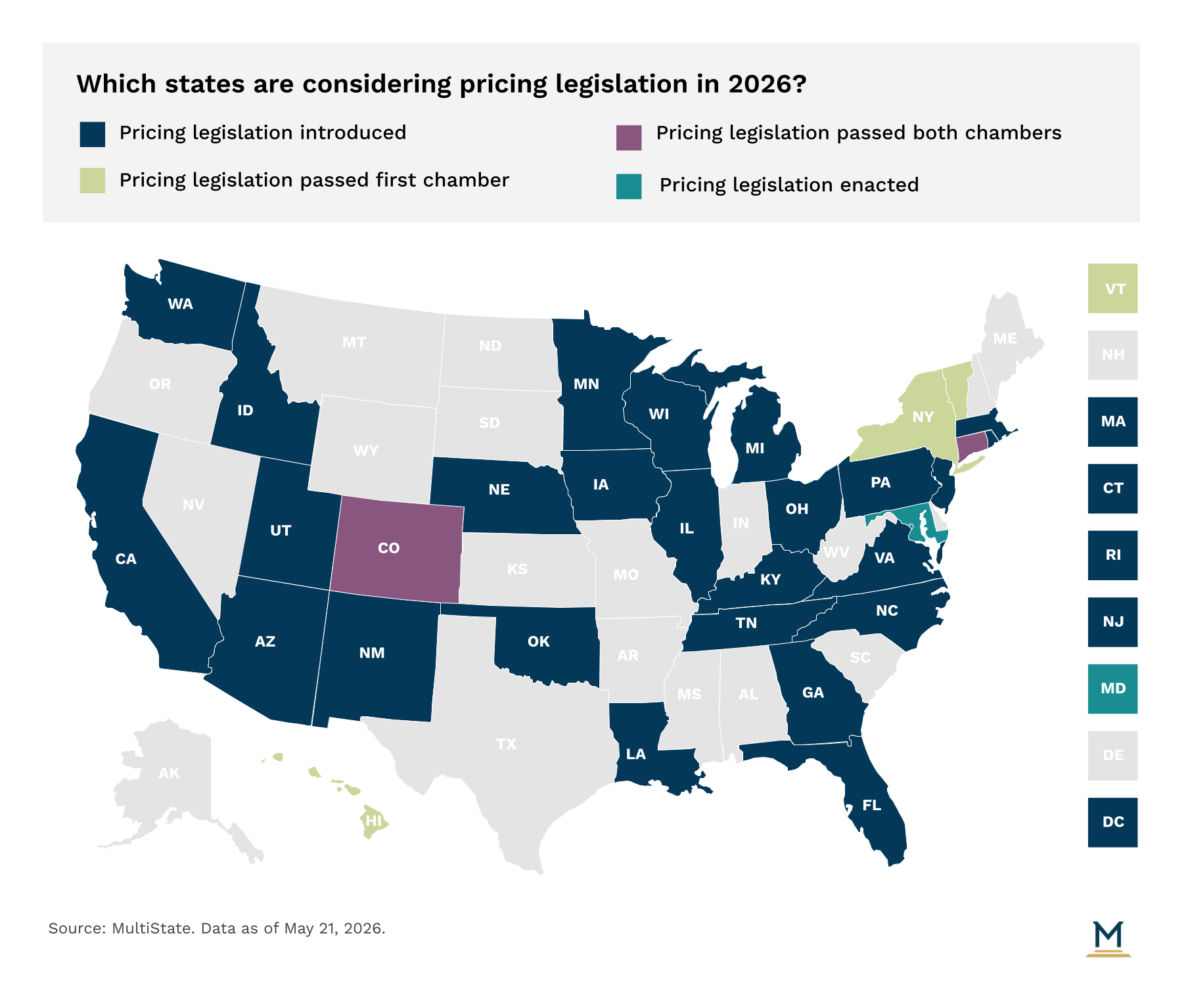
- Maryland became the first state to enact state surveillance pricing laws, prohibiting food retailers from using personal consumer data to set individualized prices, with the law taking effect October 1, 2026.
- Surveillance pricing legislation in Colorado and Connecticut has passed both legislative chambers and awaits gubernatorial signatures, with these bills applying to all retailers rather than just food establishments.
- State AI pricing bills typically prohibit using personal data to raise prices while exempting customer loyalty programs, broadly available discounts, and price differences based on geographic or operational costs.
- Dynamic pricing consumer data concerns emerged after grocery stores experimented with electronic shelf labels, leading Vermont and New York to consider bills restricting real-time price changes in retail settings.
- Connecticut's approach to algorithmic pricing regulations includes a unique disclosure requirement, mandating retailers to label when prices are increased using personal data through automated systems.
- If you're a subscriber, click here for the full edition of this update. Or, click here to learn more about our MultiState.ai+ subscription.
Maryland recently became the first state to enact a law prohibiting “surveillance pricing,” and similar measures may soon become law in Colorado and Connecticut. Surveillance pricing, a term often used to describe the practice of setting prices based on an individual consumer’s data, has drawn attention from lawmakers in many states this year. As consumers increasingly worry about the affordability of goods and concerns about AI's potential harms grow, surveillance pricing has emerged as a campaign issue heading into the midterm elections.
What is surveillance pricing?
In policy circles, the terms dynamic pricing, surveillance pricing, algorithmic pricing, and surge pricing are often used interchangeably. Lawmakers are primarily concerned with the use of personal consumer data to set individualized prices, so that consumers pay different amounts for the same goods and services based not on market conditions but on their personal data. While surveillance pricing does not necessarily rely on generative AI tools like chatbots or image generators, these practices are often enabled by algorithms and data analytics that help businesses tailor prices. And regardless of the technical nature of these systems, the concept itself has been pulled into the larger AI debate.
If you're a subscriber, click here for the full edition of this update. Or, click here to learn more about our MultiState.ai+ subscription.