
Key Takeaways
- Texas lawmakers have prefiled over 30 AI-related bills ahead of the 2027 session, building on the Texas Responsible Artificial Intelligence Governance Act that passed in 2025 and narrowly restricted certain uses of AI rather than regulating developers and deployers broadly.
- Rep. Salman Bhojani has filed HB 1201, which would require developers of frontier AI models to report a "rogue artificial intelligence incident" within 24 hours for imminent health or safety threats and within 72 hours for other incidents, along with whistleblower protections for employees who report them.
- Several Texas bills would target algorithmic pricing and rent-setting tools, including HB 405, which would require retailers to disclose AI-driven price adjustments, and HB 950, SB 156, and SB 255, which would prohibit the sale of tools that use algorithms to set or recommend residential rents.
- Gov.-elect Gina Hinojosa has proposed a moratorium on new data center projects until lawmakers adopt a regulatory framework, with plans that would require union labor, protect water supplies, shield other ratepayers from cost spikes, and end tax subsidies for the industry.
- With Democrats now controlling the Texas House, AI and data center proposals are likely to get more attention there next session, though the Republican-controlled Senate remains a tougher path despite Lt. Gov.-elect Vikki Goodwin's influence over committee assignments.
- If you're a subscriber, click here for the full edition of this update. Or, click here to learn more about our MultiState.ai+ subscription.
Democrats enjoyed a "blue tsunami" in elections earlier this month, and perhaps the most shocking results were in Texas. Gina Hinojosa became the first Democrat to win the governorship in 36 years, and the party swept statewide races for lieutenant governor, attorney general, and state comptroller. They picked up at least 20 seats in the House, seizing control of the chamber for the first time since 2002. Last week, I wrote about how Democratic gains could shape AI legislation in state capitols next year. In Texas, the bills Democrats have begun filing ahead of the 2027 session offer an early look at their AI priorities.
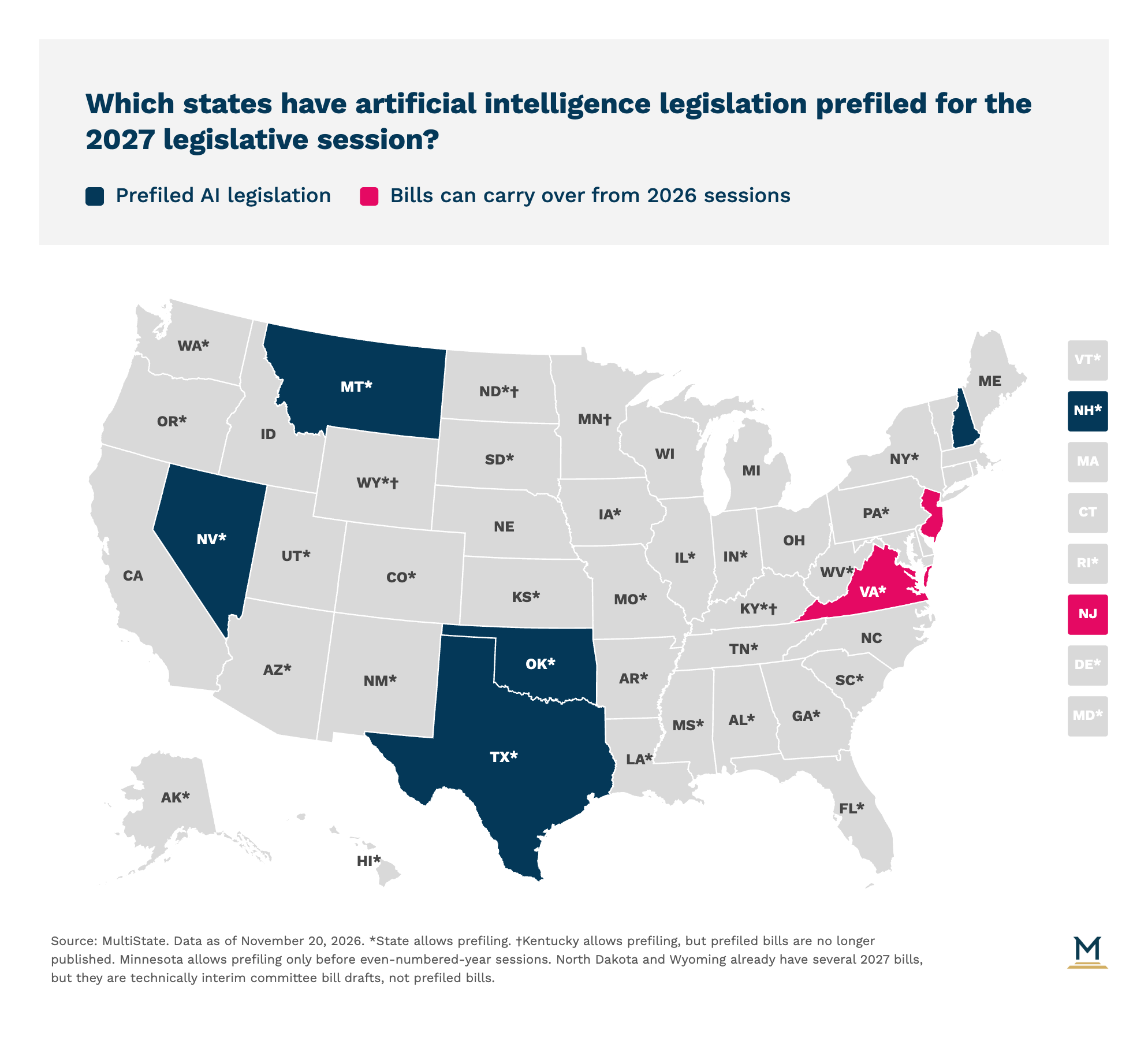
The Texas Legislature meets every other year, and next year's session could be very active. Lawmakers have already prefiled over 1,500 bills to be considered when they reconvene on January 12, including over 30 AI-related measures so far. Several other states have also prefiled AI legislation.
Rogue Artificial Intelligence Incident
A rogue artificial intelligence incident is a proposed legal term defining an event in which a frontier AI model accesses unauthorized systems, circumvents human oversight, modifies data without consent, or takes autonomous actions that create substantial risks to public safety, infrastructure, or confidential information. The term appears in Texas HB 1201, which would require developers to report such incidents to state regulators within strict timeframes. It reflects growing concern among lawmakers about AI systems acting outside the control of their human operators.
Frequently Asked Questions
What does Texas HB 1201 require AI developers to report, and what are the deadlines?
Texas HB 1201 would require frontier AI model developers to report "rogue artificial intelligence incidents" to the Department of Information Resources within 24 hours for imminent health or safety threats, and within 72 hours for all other incidents. A rogue artificial intelligence incident is defined as an event where a frontier model accesses unauthorized systems, circumvents human oversight, modifies data without consent, or takes autonomous actions causing substantial risks to public safety, infrastructure, or confidential information. The bill also includes whistleblower protections for employees.
What human oversight requirements would Texas HB 510 place on AI developers and deployers?
Texas HB 510 would require both developers and deployers of high-risk AI systems to maintain human oversight and override mechanisms. Developers would have to test those mechanisms before deployment and provide deployers the documentation needed to install, configure, maintain, and test the controls. The controls would have to allow a trained operator to monitor the system and approve, reject, modify, override, or stop its actions.
Which Texas bills would restrict the use of algorithms to set residential rents?
Three Texas bills—HB 950, SB 156, and SB 255—would prohibit the sale of tools that use algorithms to set or recommend residential rents.
What AI pricing transparency requirements are proposed for Texas retailers?
Texas HB 405 would require retailers to tell shoppers when they use AI to adjust prices. Texas HB 1184 and SB 41 would go further, prohibiting retailers from using personal information to determine the price an individual shopper sees, with certain exceptions.
What is Gov.-elect Hinojosa's stated position on data center development in Texas?
Gov.-elect Gina Hinojosa has said she will impose a moratorium on new data center projects until lawmakers adopt a regulatory framework. Her proposals would require union labor on construction projects, protect water supplies, shield other electricity customers from rate spikes, bar data center companies from using nondisclosure agreements, and end tax subsidies for the industry.