How States Are Regulating AI Mental Health Chatbots (And Other AI Professional Licensing Laws)
Key Takeaways
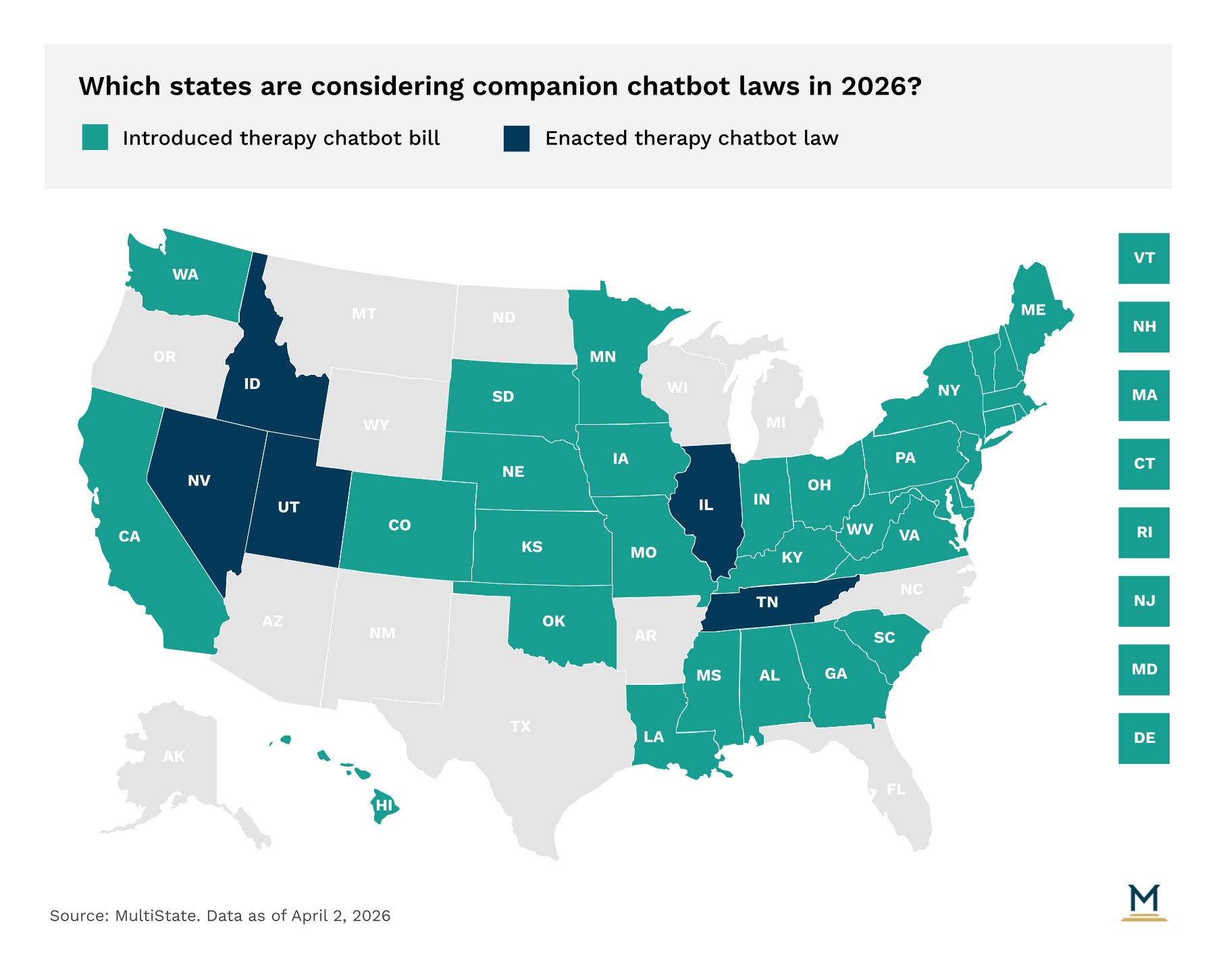
- Tennessee and Idaho enacted AI professional licensing laws this week that prohibit chatbots from representing themselves as qualified mental health professionals, joining a growing wave of state AI therapy laws.
- States are taking different approaches to AI mental health chatbot regulation, with some banning direct therapeutic services while others like Utah allow chatbots with proper disclosure requirements.
- Beyond mental health, artificial intelligence licensing requirements are expanding into other fields as lawmakers consider how AI can be used in nursing, legal services, and clinical decision-making without replacing licensed professionals.
- Illinois and Nevada allow therapists to use AI for administrative tasks like transcription, while California and Illinois are considering bills that would prevent AI healthcare professional services from substituting for licensed clinical judgment.
- The debate over state AI therapy laws reflects a broader tension between protecting consumers from unqualified practitioners and allowing AI to perform some professional functions that don't require years of credentialing.
- If you're a subscriber, click here for the full edition of this update. Or, click here to learn more about our MultiState.ai+ subscription.
Tennessee and Idaho both enacted laws this week restricting how artificial intelligence systems can represent themselves as mental health professionals, joining a growing number of states grappling with AI's expansion into licensed professional services. From therapy chatbots and legal document tools to clinical decision-making software, AI systems are increasingly performing tasks traditionally reserved for licensed professionals — often without the oversight or accountability those professions require. State lawmakers are now confronting a fundamental question: which professional functions can AI perform, and what guardrails should be in place?
Consumers are relying on artificial intelligence systems to provide a range of professional assistance, including for mental health therapy, tax preparation, legal services, and financial advice. As a result, AI systems are increasingly operating in spaces traditionally reserved for licensed professionals, sometimes without the oversight or accountability those professions require.
If you're a subscriber, click here for the full edition of this update. Or, click here to learn more about our MultiState.ai+ subscription.