Key Takeaways
- Voters across the country are using state data center ballot measures to restrict or ban data center construction, creating regulatory uncertainty for hyperscalers and AI developers planning infrastructure investments.
- In Wisconsin, 69% of voters believe data center costs outweigh benefits, with opposition spanning party lines—62% of Republicans, 77% of Democrats, and 69% of Independents share this view.
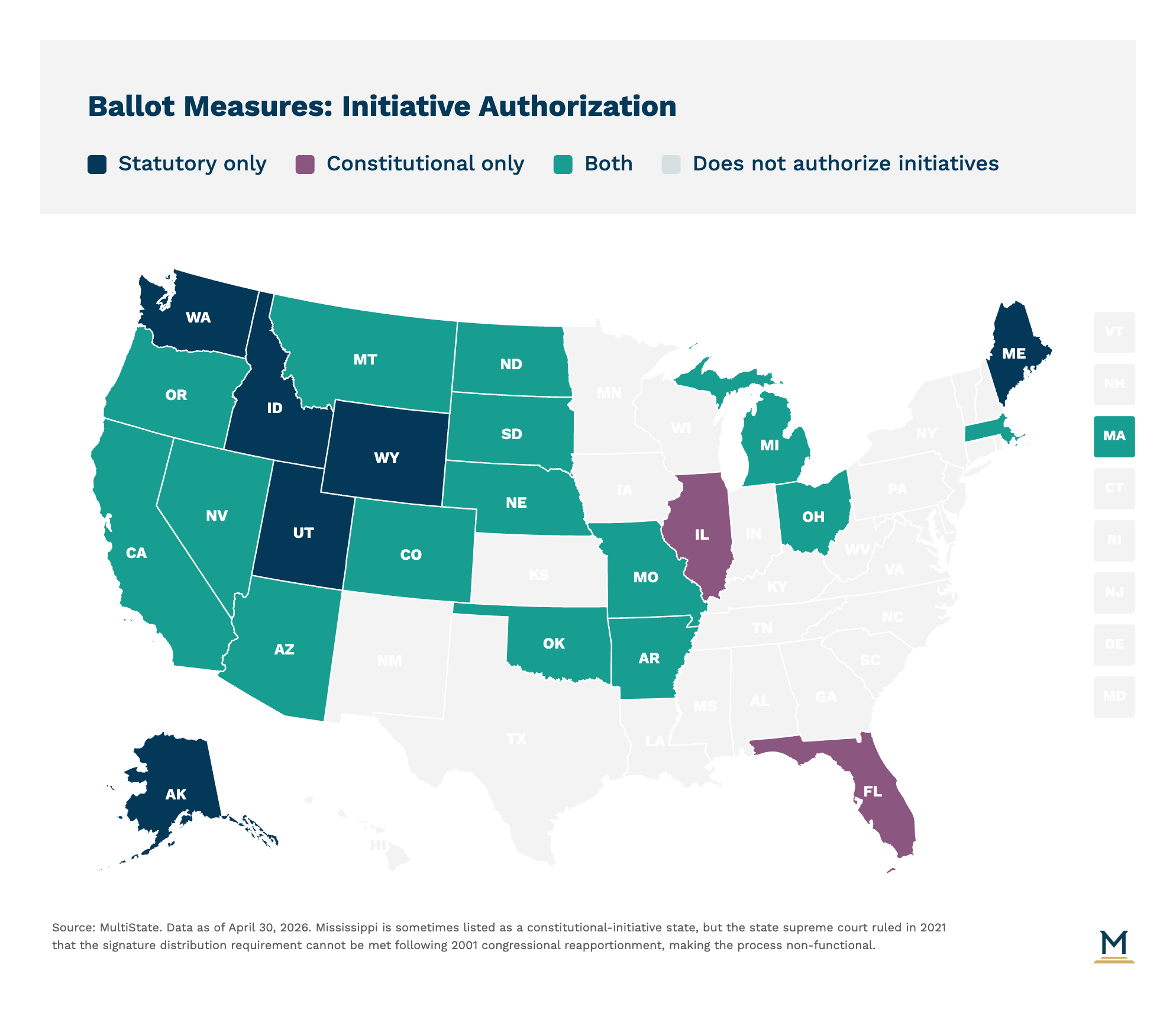
- Communities in Wisconsin, Nevada, California, Maryland, Arizona, and Ohio are pursuing voter approval requirements or outright prohibitions through local and statewide ballot initiatives.
- Ohio's proposed statewide measure would prohibit data centers requiring at least 25 MW of power, potentially blocking the large-scale facilities needed for AI training and inference workloads.
- Unlike data center moratorium legislation that allows industry engagement during the legislative process, citizen-initiated AI infrastructure ballot initiatives offer limited opportunities for stakeholder input once they qualify for the ballot.
- If you're a subscriber, click here for the full edition of this update. Or, click here to learn more about our MultiState.ai+ subscription.
Hyperscalers and AI developers planning data center investments face a growing regulatory risk from an unexpected source: voters. As community opposition to data centers mounts across the country, residents are turning to ballot measures to restrict or ban data center construction, bypassing the legislative process altogether. In a pivotal election year, we’re going to see these efforts ramp up this summer as data centers become a top issue on the campaign trail.
Data centers are the physical backbone of AI development and deployment, and the largest proposed facilities are those designed to support AI training and inference workloads. If ballot measures succeed in restricting data center construction, the downstream effects on AI capacity could be substantial.
If you're a subscriber, click here for the full edition of this update. Or, click here to learn more about our MultiState.ai+ subscription.