Key Takeaways
- Minnesota became the first state in the country to ban nudification technology outright, prohibiting online services from offering tools that generate fake nude images of real people. The law takes effect August 1, 2026, and exposes operators to civil penalties of up to $500,000 per violation.
- The law marks a shift in how states are approaching deepfake regulation, moving beyond penalizing individuals who create or share harmful content to restricting the platforms and tools that make it possible in the first place.
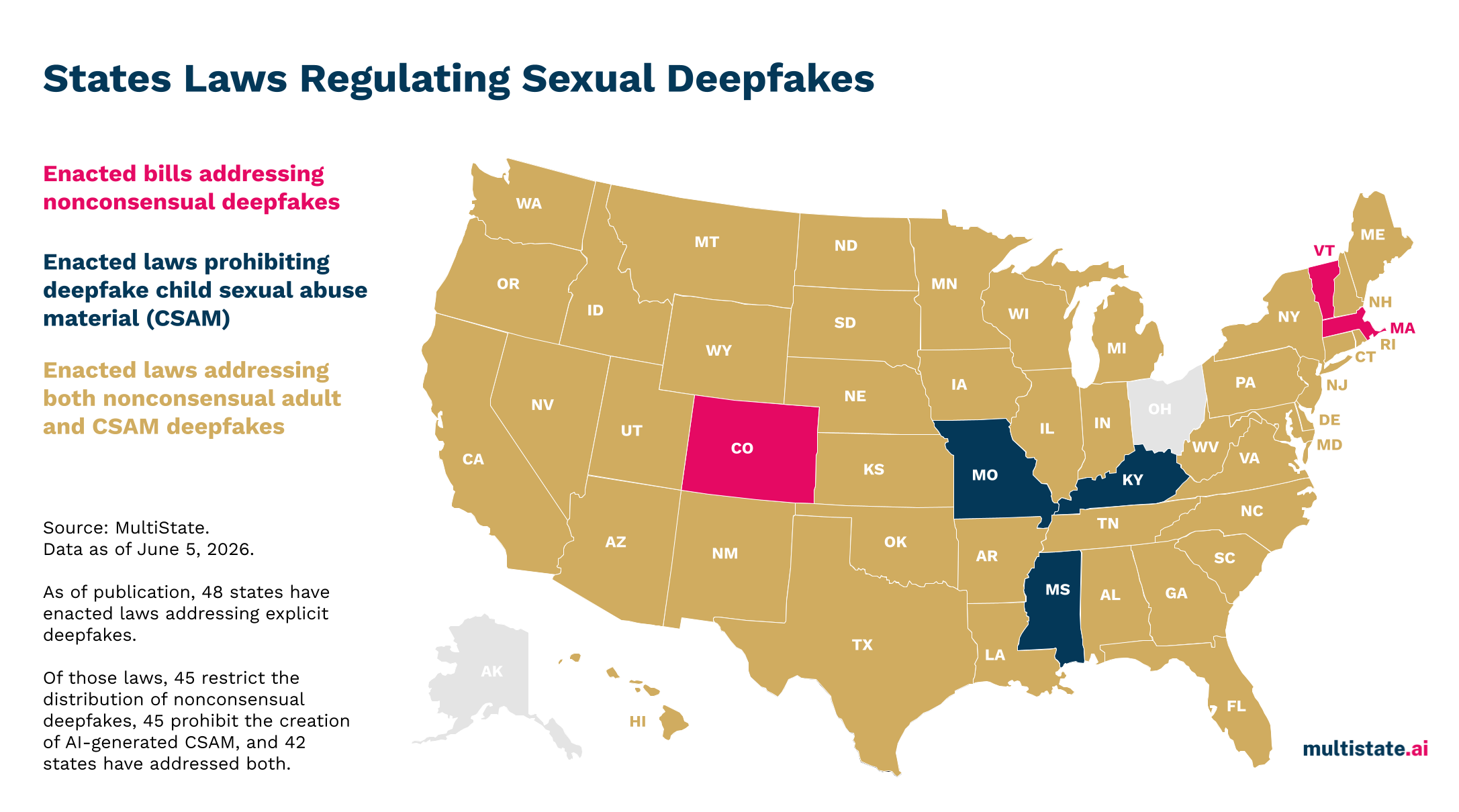
- Other states have been moving in a similar direction. Texas and California have both passed laws targeting operators of nudification services, and states including Florida and Utah have enacted requirements for platforms to remove nonconsensual intimate images on request.
- The federal TAKE IT DOWN Act, signed by President Trump and in effect as of May 19, 2026, requires covered online platforms to establish notice-and-removal processes for nonconsensual intimate images, following the lead of states that had already criminalized sexually explicit deepfakes.
- Minnesota's law may face First Amendment challenges, since it regulates access to software rather than targeting unlawful conduct directly. The broader debate over whether liability should fall on individual bad actors or the companies that build these tools is likely to shape digital replica legislation going forward.
- If you're a subscriber, click here for the full edition of this update. Or, click here to learn more about our MultiState.ai+ subscription.
Last month, Minnesota Gov. Tim Walz (D) signed the first bill (MN HF 1606) in the nation to prohibit online services from providing AI or editing tools that allow a user to create a convincing fake nude image of a real person, or "nudification" technology. The landmark legislation represents a shift from prohibiting harmful conduct to targeting the technologies that make it possible.
Generative AI has made it easier than ever to manipulate images and videos for creative purposes. But those same tools can also be used to create realistic sexual content featuring a person's likeness without consent, leading to harassment, humiliation, and reputational damage. The technology has been used against both public figures and private individuals, generating fake nude images of celebrities such as Taylor Swift, as well as ordinary high school students.
If you're a subscriber, click here for the full edition of this update. Or, click here to learn more about our MultiState.ai+ subscription.