
Key Takeaways
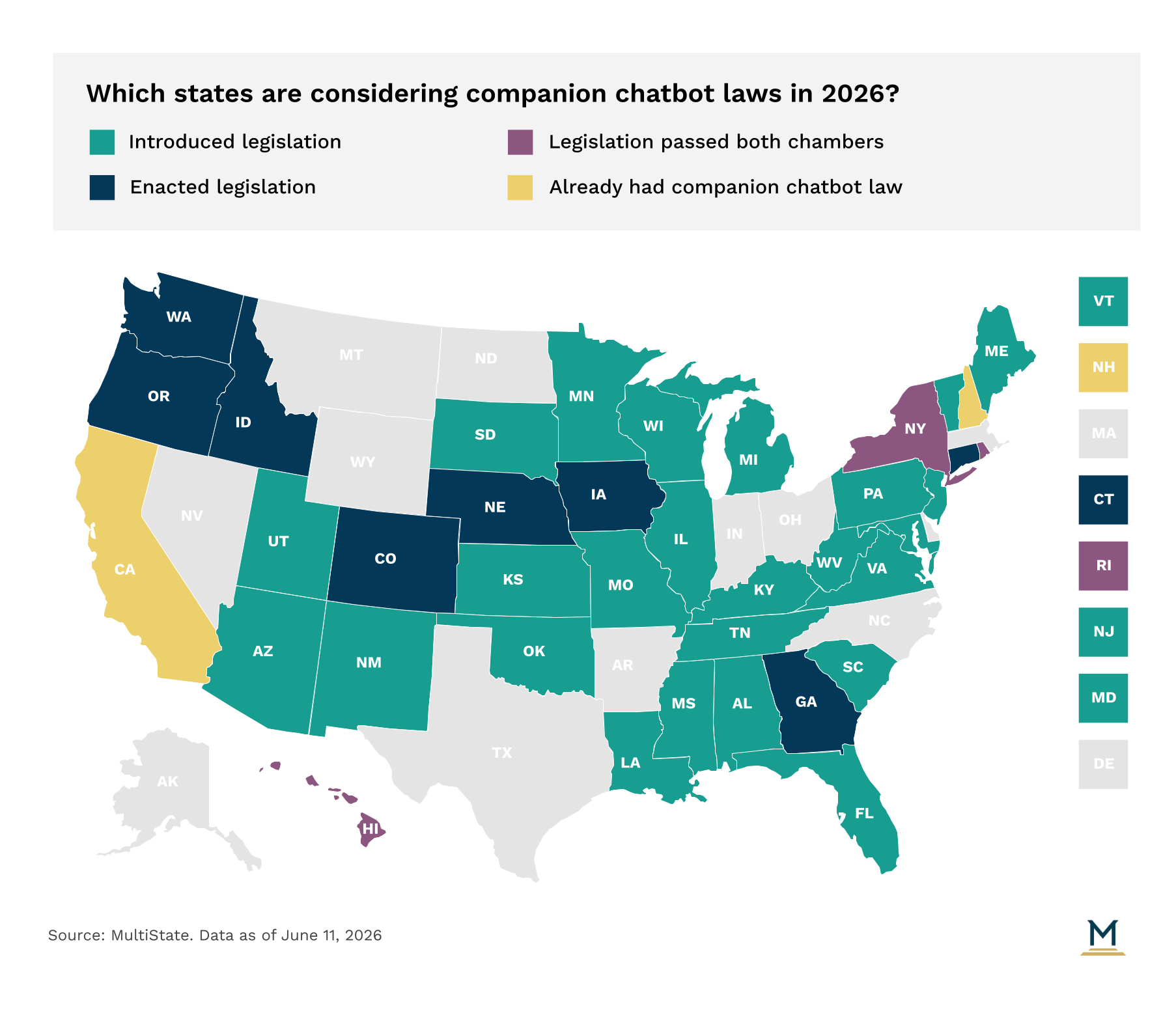
New York lawmakers passed companion chatbot regulation requiring age verification for minors and prohibiting features that simulate emotional relationships or promote harmful behaviors. The state also enacted a five-year moratorium on AI-enabled children's toys while a task force studies their developmental impact.
New York advanced AI transparency requirements that mandate developers disclose training data sources and attach digital labels to AI-generated content. These measures go further than California's similar law by requiring more detailed disclosures about datasets, copyrighted material, and personal information used in model development.
The state passed a surveillance pricing ban prohibiting retailers from using personal data to set individualized prices, though bona fide discounts and loyalty programs remain permitted. Businesses using automated pricing based on non-personal factors must disclose the system and explain what inputs influence prices.
New York became one of the first states to address AI's impact on employment by requiring large employers to report annually on how artificial intelligence affects hiring decisions and job displacement. The reports must include estimates of positions eliminated or left unfilled due to AI, along with information about oversight and risk mitigation.
If you're a subscriber, click here for the full edition of this update. Or, click here to learn more about our MultiState.ai+ subscription.
Last year, New York enacted a landmark frontier AI safety law, joining California in establishing one of the nation's first regulatory frameworks for developers of advanced AI models. The law has since helped shape similar proposals in other states, including legislation recently passed by the Illinois Legislature. This year, New York lawmakers advanced a series of measures aimed at specific applications of artificial intelligence, particularly those affecting children and consumers, including several novel policy approaches that could influence legislation in other states.
After several delays on a budget agreement, New York lawmakers finished up the legislative session and adjourned in the first week of June. The AI measures that emerged from the session reflect a shift from regulating AI developers to regulating how AI is used. Lawmakers targeted specific applications of artificial intelligence, including companion chatbots, AI-generated content, surveillance pricing, and the impact of AI on employment.
Frequently Asked Questions
What does New York's companion chatbot law require for minors in 2026?
New York lawmakers passed a bill (A 10379/S 9051) that would require companion chatbot operators to use age assurance methods to determine if a user is a minor before providing certain AI companion features. The bill would prohibit minors from accessing features that simulate emotional relationships, use personal information to foster engagement, mislead users about the chatbot's non-human nature, or generate content promoting self-harm, substance abuse, or sexual activity.
Does New York ban surveillance pricing or just require disclosure?
New York lawmakers passed the One Fair Price Act (A 9349/S 8623), which bans the use of personal data to set prices, though it allows bona fide discounts and loyalty programs. The measure also requires retailers using automated pricing systems based on non-personal factors to disclose the use of such systems and the categories of inputs that influence pricing.
What AI transparency requirements did New York pass for generative AI training data?
Lawmakers passed a bill (A 6578/S 6955) that would require developers of generative AI models to publicly disclose information about training datasets, including data sources, whether copyrighted or personal information was used, and how the data was processed. The measure would apply when a model is released or substantially modified and requires more detailed disclosures than California's similar 2024 law.
What does New York require companies to report about AI's impact on employment?
New York lawmakers passed a bill (A 9581/S 8706) that would require businesses with more than 50 employees and publicly traded companies to annually report how their use of artificial intelligence affects hiring and employment. Reports must include estimates of jobs eliminated, added, or left unfilled due to AI, along with information about AI use cases, human oversight, use of sensitive data, and risk-mitigation measures.
When will New York's 2026 AI bills become law?
Governor Kathy Hochul has until the end of the year to decide whether to sign these bills into law, as she can request the legislature not send a bill to her desk until later in 2026. She may wait to sign controversial bills until after the November election, or she could sign popular bills before election day. The governor can also use chapter amendments to change the language of final laws even after the legislature adjourns.