
Key Takeaways
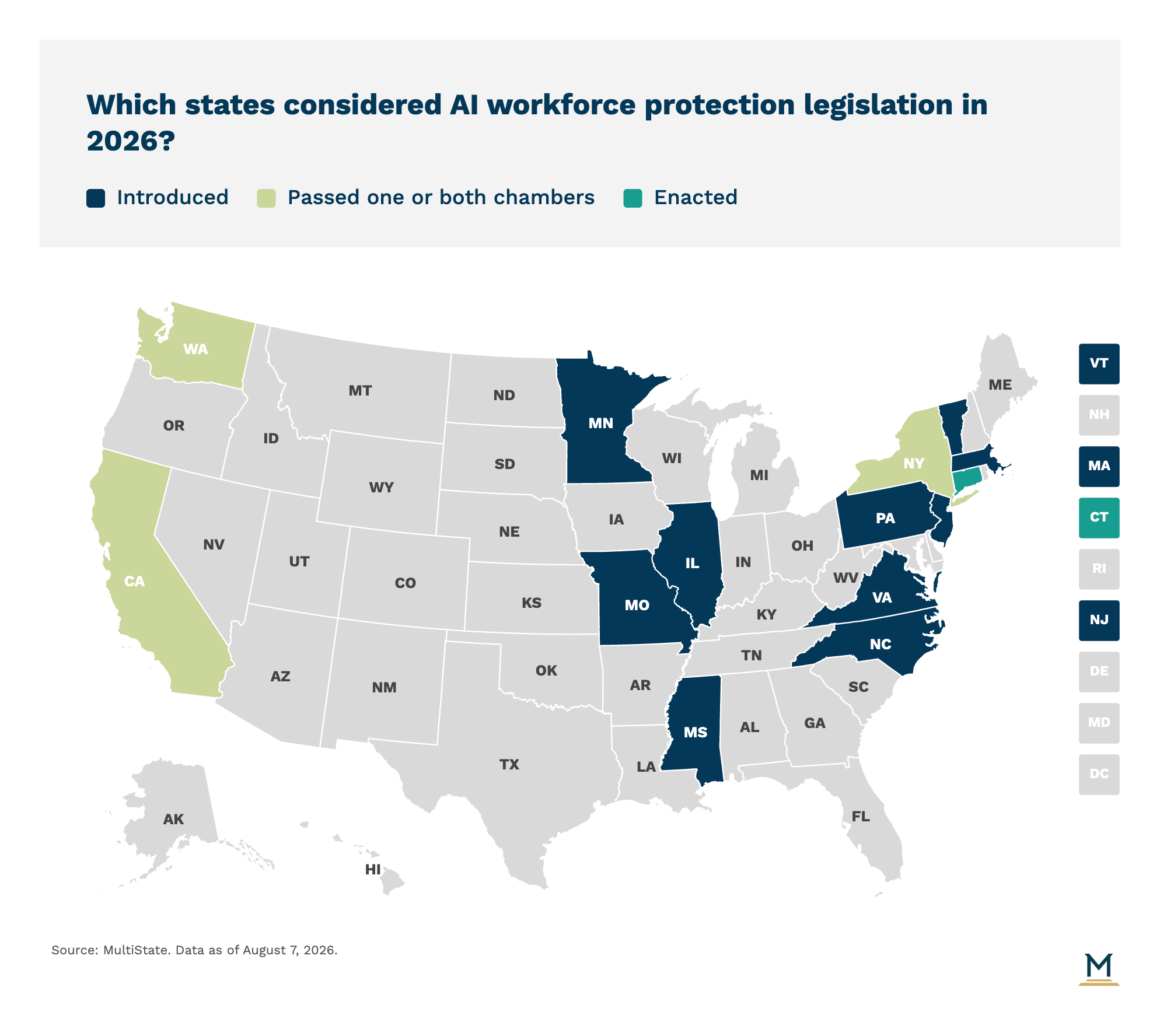
Colorado and Connecticut enacted AI employment laws in 2026 that require employers to notify job applicants when automated decision-making technology is being used in hiring. Both states focus on transparency and disclosure rather than requiring bias audits or risk assessments.
California lawmakers are making a second attempt at passing AI hiring laws after last year's veto, with revised legislation that addresses the governor's concerns about customer reviews and notice requirements. The state's privacy agency has also issued new regulations requiring businesses to conduct risk assessments before using AI in hiring decisions.
New York took a different approach by sending legislation to the governor that would require large employers to report annually on how AI has impacted their workforce, including estimates of employees displaced or hired due to AI. This reporting requirement aims to provide data that could inform future employment regulations.
The new laws in Colorado and Connecticut represent an inflection point for state AI employment legislation after years of limited progress, potentially serving as models for other states considering how to regulate AI in hiring and employment decisions.
If you're a subscriber, click here for the full edition of this update. Or, click here to learn more about our MultiState.ai+ subscription.
When state lawmakers first turned their attention to AI, employment seemed to be a natural place for legislative activity to occur as many businesses incorporate AI into their hiring and employee evaluation processes. Despite substantial interest from state lawmakers, AI employment legislation has been slow to be enacted. This year, the tide may be turning after lawmakers in Colorado and Connecticut enacted legislation addressing AI's use in employment. Additionally, in California, lawmakers are making a second attempt at enacting AI employment legislation after Governor Gavin Newsom (D) vetoed a similar bill last year. Meanwhile, in New York, legislation requiring some businesses to report on how AI has impacted employment decisions has been sent to Governor Kathy Hochul's (D) desk.
State lawmakers have shown interest in establishing guardrails for AI's use in employment for the last few years. One of the primary concerns related to AI's use in employment is the potential for AI to produce unintentionally discriminatory results. Despite this interest, AI legislation addressing how private employers use AI to assist in making employment has been slow to be enacted. New York City was the first jurisdiction to enact regulations regulating private employer's use of AI's in hiring. However, that law has suffered from low compliance rates and is not a model that has been subsequently adopted in other jurisdictions.
Frequently Asked Questions
What are the main differences between Colorado's original AI law and the amended version that passed in 2026?
Colorado's amended law (SB 189) shifts focus from "high risk" AI systems to "automated decision-making technology" (ADMT) that materially influences consequential decisions. The new law eliminates the requirement for risk assessments to detect discriminatory results, instead requiring developers to inform deployers of known risks and circumstances where ADMT should not be used. The amended law takes effect January 1, 2027.
Do Colorado and Connecticut require bias audits for AI used in hiring decisions?
Neither Colorado's amended AI law nor Connecticut's new AI employment legislation requires bias audits or risk assessments for automated decision-making technology used in employment. Connecticut's law states that using ADMT will not be a defense against discrimination complaints, but allows employers to present evidence of anti-bias testing or other proactive efforts to avoid discriminatory results.
What notice requirements do employers have under the new Colorado and Connecticut AI employment laws?
Colorado requires employers to notify applicants and employees that ADMT is in use and provide an explanation of any adverse outcomes. Connecticut requires employers to disclose to applicants when ADMT is being used, including what kinds of personal data are being used to make decisions, with provisions applying to ADMT used in hiring after October 1, 2027.
How does California's 2026 AI employment bill (SB 947) differ from the bill Governor Newsom vetoed in 2025?
The 2026 bill allows customer reviews to be included among supporting information for employment decisions regarding discipline, termination, and deactivation, whereas the previous bill prohibited using customer ratings as the sole or primary factor. The new legislation also removes the prior notice requirement for using AI in employment decisions, as this has been addressed by amended California Privacy Protection Agency regulations.
What does New York's AI employment reporting legislation require from businesses?
The legislation sent to Governor Hochul's desk would require businesses with more than 100 employees or that are publicly traded to annually report to the New York Department of Labor on AI's impact on hiring processes. Reports must include estimates of employees displaced due to AI, hired due to AI, and positions previously filled but not refilled due to AI, which the Department would use to produce an annual report on AI's impact on hiring.

